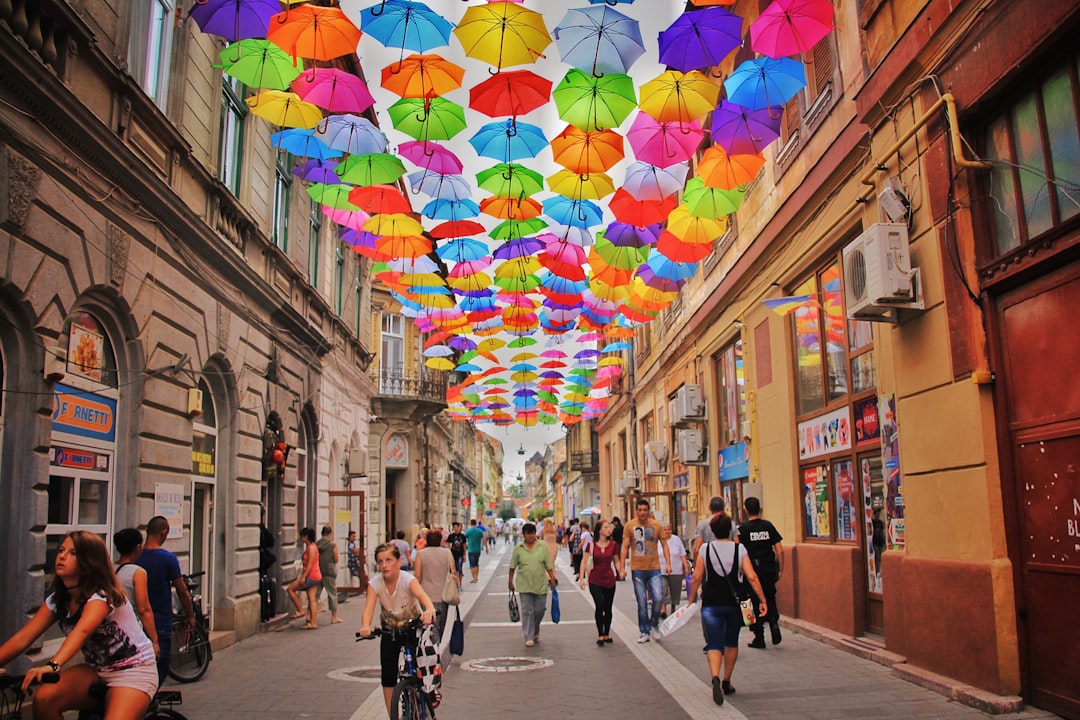
The recent Lao New Year incident in rural Louisiana is a painful reminder that even the most joyful public gatherings can turn risky in seconds. According to the source report, several people were injured when a vehicle struck revelers during a parade celebrating Lao New Year, and the driver was quickly arrested and charged with impaired driving. For organizers of street processions, cultural parades, and diaspora festivals, the lesson is not to stop celebrating — it is to plan like public safety depends on it, because it does.
For community leaders running a parade in a small town, the pressure is familiar: limited budgets, volunteer-heavy staffing, and a belief that “we’ve always done it this way.” But the modern reality is more complicated. Traffic patterns are busier, social media can magnify confusion, and emergency response time can be slower in rural areas. That is why the most useful response to this kind of tragedy is a practical one: build safer routes, train marshals, coordinate with police and medical responders, and document everything. The same disciplined approach that helps creators build rebuilding local reach can help an organizer rebuild trust after an incident.
In this guide, we break down what happened, why parade safety is more than a checklist, and how small towns and diaspora groups can protect participants without losing the spirit of the celebration. We will focus on traffic safety, volunteer training, event emergency planning, and the practical realities of rural festivals — with the goal of giving organizers a playbook they can actually use.
What the Louisiana Lao New Year Crash Reveals About Parade Risk
Joyful crowds are vulnerable when streets are not fully controlled
Parades and processions create a unique kind of public space: temporary, emotional, and often shared by pedestrians, spectators, performers, vendors, and vehicles under tightly managed conditions. If even one control fails — a barrier gap, a distracted driver, a missed detour sign — the consequences can be severe. In the Louisiana case, the dangerous part was not simply the presence of a vehicle; it was the failure of the street environment to keep that vehicle from reaching people who were gathered to celebrate. That is the core issue behind parade safety: the crowd is safest when the street is truly closed or effectively separated.
Community organizers often underestimate how quickly a festive street can become a conflict zone. People move in and out for food, photos, and restroom breaks, children run ahead, and family members step into roadways to film dances or float arrivals. The more informal the event, the greater the risk that participants will assume someone else is handling traffic control. For organizers comparing event operations, think of it the way planners think about measuring reliability in tight markets: small failures can have outsized consequences when there is little margin for error.
Rural events face a different set of constraints
Urban parades usually have access to larger police details, more barricades, and clearer traffic engineering support. Rural festivals, by contrast, are often powered by volunteers and goodwill. That means fewer cones, fewer radios, less lighting, and sometimes no formal detour plan at all. In a small town, a single two-lane road might be both the parade route and the main emergency access corridor, which forces organizers to make difficult tradeoffs between celebration and mobility. The smart response is to plan the route around access, not to improvise access around the route.
Rural organizers should also think about how people will learn about closures. Many diaspora communities rely on Facebook, WhatsApp, Instagram, church bulletins, and word of mouth. That makes communication essential, especially when a procession crosses a public road or starts after dusk. If your team is used to cross-posting updates, tools like seamless multi-platform chat can help keep public announcements consistent, but the real win is having one authoritative message that everyone shares. Conflicting instructions are a safety hazard.
Impaired or reckless driving changes the planning standard
The source report notes that the driver was arrested and charged with impaired driving. That detail matters because it means parade organizers should not plan only for “normal” traffic behavior. Public events need defenses against abnormal driving too: speed cushions, barriers, lane closures, strategic police placement, and volunteer marshals at vulnerable intersections. If alcohol, road rage, or curiosity-driven drivers are possible, then the route must be treated as a controlled perimeter, not just a suggestion.
Public-facing groups can also learn from how digital teams protect systems against unpredictable inputs. The idea behind benchmarking safety filters is similar: assume adversarial or careless behavior will happen, then test the system against it. A parade route should be stress-tested the same way. Ask: What if one barrier is removed? What if a driver misses the detour? What if a volunteer is absent? What if the crowd spills into the lane? Those questions are uncomfortable, but they are exactly what safe planning requires.
The Core Elements of a Safe Parade Route
Map the route like an emergency corridor, not a festival wish list
A parade route should begin with a map that includes every access point, driveway, side road, parking lot entrance, hydrant, and medical access zone. Organizers need to see the route from a responder’s perspective, not just a spectator’s. That means identifying places where a vehicle might still enter, where a child might run across, and where emergency vehicles could get blocked. Route design is part choreography and part civil engineering, even if the event is small.
Good route planning also respects local patterns. School-dismissal traffic, church services, gas station entrances, and weekend market flow all affect risk. This is why organizers should coordinate with the town, parish, or county early enough to adjust timing, signage, and parking. In many cases, the safest parade is the one that uses a shorter route, fewer crossings, and a hard stop at the highest-risk intersection. For organizers studying operational tradeoffs, the logic resembles peak-hour traffic management: traffic behaves differently when demand and access collide.
Use physical separation before you rely on human judgment
Human marshals matter, but human attention is limited. Cones alone are not enough if a driver can simply steer around them. The safest events combine multiple layers: police closures where possible, heavy barricades at entry points, roped or taped pedestrian zones, parked vehicles as passive blockers where appropriate, and volunteer marshals only as the final layer. If the event has a route through a high-speed road, better barriers and a larger closure window are not optional — they are essential.
When budgets are tight, organizers sometimes choose between “perfect” and “good enough.” But in public safety, barrier quality is one of the few areas where cheap can become expensive instantly. That is especially true when visibility is poor, the crowd is large, or the driver line of sight is obstructed. Communities that manage public gatherings well often think in terms of layered resilience, much like teams that build regulatory compliance playbooks before deploying critical equipment.
Put signage where it changes behavior
Signs are not decoration; they are behavioral instructions. A closure sign at the start of a road is less useful if drivers only encounter it after they have already committed to the route. Place warnings far enough out that vehicles can turn around safely, and repeat the message at every critical branch. Use plain language, large fonts, and multilingual signage where needed, especially in diaspora communities that may include elders or recent arrivals who do not read English quickly under pressure.
It is also worth thinking about how people consume information on the move. Many attendees will not read a long notice, but they will respond to a map graphic, a pinned post, or a short video explainer. That is where multimedia-first outreach matters. If your event team publishes updates across several platforms, a system like seamless multi-platform chat can help coordinate messaging between platforms, while better mobile data access can improve how quickly volunteers share real-time updates from the field.
Volunteer Marshals: The Human Layer That Makes or Breaks Safety
Train marshals before the event, not during the parade
Volunteer marshals are often the difference between a controlled route and a chaotic one. But asking a friendly uncle, church member, or youth volunteer to “stand by the corner” is not training. A marshal needs a clear role: stop pedestrians when a float approaches, spot unsafe crowd movement, communicate with a supervisor, and escalate problems immediately. Training should include basic situational awareness, how to speak firmly without escalating conflict, and what to do if a driver ignores instructions.
For small organizations, training can be simple and still effective. A 60-minute session should cover route basics, hand signals, radio or phone check-ins, the location of first-aid supplies, and the chain of command. When possible, do a walk-through at the exact event site so volunteers can see where blind corners, crossings, and bottlenecks occur. Event teams can borrow the mindset of scalable device workflows: if the process is repeatable, the response is more reliable.
Give marshals tools, not just instructions
A marshal without equipment is mostly a witness. At minimum, volunteers should have reflective vests, bright flashlights if the event runs into dusk, whistles or voice amplification where appropriate, a printed route map, emergency contact numbers, and a simple incident log sheet. If there are multiple zones, color-code them so volunteers know exactly where they belong. The goal is to reduce hesitation and eliminate the vague “someone should handle that” problem.
Communication tools matter too. Some events do fine with mobile phones, while others need radio discipline because cell service is unreliable in rural areas. Organizers should decide in advance how to report a blocked road, injured attendee, missing child, or suspicious vehicle. Teams that manage multiple channels can take a lesson from encrypted messaging systems: clear channels and verified identities help prevent confusion when the stakes are high. For public events, the equivalent is a known call tree with assigned backups.
Build a chain of command and keep it visible
Volunteers must know who has authority to pause the parade, reroute people, call 911, or stop vehicles from entering a zone. If that authority is unclear, people hesitate, and hesitation is dangerous during an unfolding incident. Each zone should have one lead marshal and one backup, with a direct link to the event safety lead. That lead should have the power to suspend the event if a vehicle breach, medical emergency, or crowd surge occurs.
Strong chain-of-command design is familiar to teams managing complex operations. In the digital world, organizations rely on orchestration patterns and data contracts to keep systems aligned. In the physical world, a parade needs the same discipline: no conflicting orders, no hidden decision-makers, and no improvisation when a crisis starts. The crowd should be able to see who is in charge, and that person should be easy to contact.
Emergency Planning for Small Towns and Diaspora Communities
Write the emergency plan in plain language
Event emergency planning should fit on one page if possible, with attachments for maps and contact lists. It should name the organizer, safety lead, nearest hospital, EMS contact, police contact, route closure times, and the exact steps to follow for injury, fire, severe weather, or vehicle intrusion. The point is not to produce a binder nobody reads. The point is to create a usable plan that volunteers can understand under stress.
Small towns and diaspora groups often lack dedicated safety staff, which means the plan should be built for non-experts. Use everyday words, not bureaucratic language. For example, say “If a car enters the parade area, volunteers move people to the sidewalk and call 911” instead of a vague “activate incident response protocols.” Clarity saves time, and time saves lives. For organizers who care about practical communication, the same principle appears in legal compliance checklists: simple, explicit, and action-oriented guidance performs better than dense policy language.
Coordinate with first responders before the crowd arrives
Emergency planning works best when responders already know the site. Share route maps, access points, and the event schedule with police, fire, EMS, and local hospitals in advance. If the event is large enough, invite them to a quick site walkthrough. This helps responders identify where they can enter, where they can stage, and how they will reach a victim if the main route becomes blocked.
It is also wise to designate reunification points for families, especially when children and elders are present. If someone gets separated after an incident, the first minutes matter. A family meeting point, posted visibly on signage and in social posts, can reduce panic and help police or volunteers manage missing-person reports. Organizers who build reliable systems often compare this to real-time capacity planning: if you know where the pressure points are, you can direct people before the system overflows.
Practice the plan with realistic drills
Plans that never get tested usually fail in the real world. A tabletop drill can be enough for a modest festival, but even that should include realistic scenarios: a vehicle intrusion, a lost child, a medical collapse, a crowd surge, or a sudden weather change. The drill does not need to be dramatic; it just needs to force people to make decisions. Afterward, document what slowed the team down and what confused the volunteers.
Think of drills as the event equivalent of quality assurance. Teams that work on digital or operational systems often use benchmarking and feedback loops to spot weak points before they become failures. Community organizers should do the same. When a marshal says, “I didn’t know who to call,” that is not a small problem — it is the exact gap that can turn a joyful parade into an emergency.
Communication, Trust, and Cultural Sensitivity
Safety messaging must respect the celebration
One of the hardest parts of parade safety is that strict controls can feel like they dampen the joy. Community leaders may worry that fences, checkpoints, and marshal instructions make the event feel less welcoming. The key is to frame safety as protection of culture, not as suspicion of the community. Explain that barriers protect elders, children, dancers, and the artists who make the celebration possible. When people understand that safety preserves the ritual, they cooperate more readily.
That messaging should be culturally fluent. In diaspora settings, a safety notice may need to be shared in English, Lao, Urdu, Arabic, Spanish, or another community language depending on the audience. Visual storytelling helps too, especially for families who share updates on mobile. Just as creators use stage presence principles for video to hold attention, organizers can use simple graphics and short clips to show where to park, where not to walk, and how to find aid stations.
Prepare for misinformation and rumor spread
After any incident, rumors move faster than facts. In community events, this can include false claims about injuries, blame, or whether the event was properly permitted. Organizers should identify one official spokesperson and one backup, then publish updates quickly, clearly, and consistently. If a family needs to know whether a child has been found or a hospital transfer has happened, they should not have to rely on gossip.
Modern communities already know how easily attention can splinter across channels. That is why practices from constructive audience communication are useful here: acknowledge concerns, answer what you can, and avoid becoming defensive. Safety communication is not marketing. It is trust maintenance.
Use the event as a relationship-building opportunity
After the parade, organizers should meet with volunteers, residents, business owners, and responders to review what worked and what failed. This debrief should not be a blame session. It should be a learning session that leads to concrete improvements: more signage, a longer closure window, better marshal training, or a safer route for the next year. Trust grows when people see that leaders listen and adapt.
Communities that treat feedback seriously often improve faster than larger institutions. That is one reason to document each year’s plan and store it in a shared folder that future organizers can access. If you are building a repeatable playbook, the principle is similar to competitive intelligence for creators: observe, compare, refine, and then update the system based on actual outcomes.
Practical Safety Checklist for Organizers
Before the event
Before parade day, confirm the route map, closure times, emergency contacts, traffic-control equipment, volunteer assignments, and weather plan. Verify that all permits are in place and that local authorities know the exact start and end points. If there are vendors, floats, or stage elements, make sure their loading and unloading areas do not conflict with the pedestrian route. A thorough prep list is the easiest way to catch the mistake that would otherwise be missed until the crowd arrives.
It also helps to think like a production team. In many ways, event prep resembles last-chance conference planning: the deadline is fixed, the margin for error is small, and every missing detail becomes visible on the day itself. Organizers should hold a final walk-through with the route owner, safety lead, and at least one first responder representative if possible.
During the event
During the parade, keep the safety lead mobile and reachable. Position marshals at the most vulnerable points: entrances, intersections, staging areas, and places where crowds naturally narrow. Do not let volunteers drift into socializing so much that they miss an approaching hazard. If the route feels crowded, slow the pace before the crowd starts pushing into the street.
Use radio check-ins or phone pings at regular intervals, and make sure a backup person is watching the same channels in case one lead becomes occupied. If an incident occurs, the priority order should be simple: stop movement, protect people from further harm, call emergency services, and preserve the scene as needed. This is where disciplined operational thinking, like connected-asset management, can help leaders standardize what happens next instead of improvising under stress.
After the event
After the event, gather incident notes, volunteer observations, and feedback from residents and businesses along the route. Look for bottlenecks, confusion points, and near misses, not just major incidents. A near miss is often the best clue that a serious failure almost happened. Treat those moments as design feedback for the next year’s plan.
Over time, this review process becomes a community asset. The event becomes safer not because luck improved, but because the organizers learned. And when communities can say, “We changed the route because we learned,” they signal something more powerful than perfection: responsibility. That is the standard that encourages families to return next year and trust the celebration again.
Comparison Table: Common Parade Safety Approaches
| Safety Approach | Best For | Strength | Weakness | Organizer Priority |
|---|---|---|---|---|
| Police road closure | High-traffic routes, urban edges, major intersections | Strongest vehicle exclusion | Requires lead time and coordination | Highest |
| Heavy barricades | Entry points and vulnerable crossings | Physical protection against vehicle intrusion | Can be expensive or hard to source | Very high |
| Volunteer marshals | Small towns and limited-budget events | Flexible, fast to deploy | Depends on training and attention | High |
| Traffic cones and signage | Low-speed side streets and advance notice | Low-cost and easy to set up | Can be ignored by drivers | Medium |
| Rerouted procession | Any event with a risky road segment | Reduces exposure at known danger points | May require cultural or logistical compromise | High |
Lessons for Community Organizers Beyond Louisiana
Culture is strongest when it is protected
The Louisiana Lao New Year crash should not be remembered only as a tragedy. It should also be remembered as a warning that community celebration needs serious operational planning. When organizers invest in safety, they are not rejecting tradition. They are making it possible for the tradition to continue. That is especially important in diaspora communities, where annual processions may be one of the few public rituals that connect younger generations to heritage.
This is also where public storytelling matters. Communities often search for examples, not just rules. If organizers document their safety practices, they create a model that others can adapt. That kind of knowledge-sharing is how local leadership grows, just as local media grows by making the right kind of niche coverage useful and shareable.
Plan for dignity, not just damage control
A strong safety plan does more than prevent injury. It protects the dignity of dancers, elders, volunteers, families, and faith leaders. It keeps a celebration from being defined by panic, confusion, or blame. A well-run event gives the community a sense of order, hospitality, and mutual care, even in the presence of risk. That is what people remember.
And because most community organizers are volunteers themselves, the goal should be realism, not perfection. Start with the biggest risk point, fix that, then improve one layer each year. Over time, the parade becomes safer and the process becomes easier to repeat. That is how trust is built in public life.
Make safety part of the story you tell
People are more likely to support safety measures when they see them as part of the event’s identity. If you talk about marshals, closures, and emergency planning as acts of care, the community will understand the why behind the rules. Share the route map early. Introduce the safety volunteers publicly. Post the emergency points in advance. When the public can see the structure, they are more likely to follow it.
For organizers who want to strengthen the full event experience, it can help to study how other sectors manage complex audiences, from visitor experience design to data-driven sponsorship planning. Those fields are different, but the lesson is the same: clear planning, visible roles, and reliable communication create better outcomes.
Pro Tip: If your event has one thing it can’t do, let it be this: never rely on “people will just know where to go.” In parade safety, assumed knowledge is one of the biggest risks you can carry.
Frequently Asked Questions
What is the most important first step for parade safety planning?
The most important first step is a route review focused on vehicle access and pedestrian separation. Before you assign volunteers or print flyers, map where a car could enter, where people will naturally gather, and where emergency vehicles must be able to pass. A safe parade starts with the street itself, not with the stage or float schedule.
How many volunteer marshals does a small town parade need?
There is no fixed number, but every risk point should have coverage. That usually means marshals at entries, intersections, staging areas, and any place where pedestrians may cross traffic. A short route with several turns may need more coverage than a straight route, especially if the crowd is dense or the event extends into evening hours.
Should organizers use barriers even for short cultural processions?
Yes, if the procession occurs on or near active roadways. Short events still face the same risks from impatient drivers, distracted motorists, or people who misunderstand closures. Barriers are one of the most effective ways to prevent a vehicle from entering a crowd zone, and even a modest barrier plan is better than relying only on cones or verbal warnings.
What should be in an event emergency plan?
An emergency plan should include the route map, closure times, key contacts, medical and police information, crowd control assignments, reunification points, and clear steps for incidents like vehicle intrusion, injuries, severe weather, or lost children. It should be short enough that volunteers can read it quickly, but detailed enough that everyone knows what to do without guessing.
How can diaspora groups communicate safety rules without making the event feel less festive?
Frame safety as care for the community, not as suspicion or restriction. Use warm, culturally respectful language, multilingual signage where needed, and visual explanations that show the route, parking, and no-entry areas. When people understand that the rules protect elders, children, and performers, they are more likely to support them.
What should organizers do after a near miss or accident?
They should document what happened, notify the appropriate authorities, support anyone injured or affected, and hold a structured debrief as soon as possible. The debrief should focus on route design, communication, volunteer readiness, and crowd behavior, not blame. The goal is to improve the next event and restore trust.
Related Reading
- Rebuilding Local Reach: Programmatic Strategies to Replace Fading Local News Audiences - Why local trust and consistent communication matter after a community crisis.
- Inside the Promotion Race: How Niche Sports Coverage Builds Loyal Communities - Lessons on building audience loyalty through repeated, reliable coverage.
- Measuring reliability in tight markets: SLIs, SLOs and practical maturity steps for small teams - A useful framework for thinking about event reliability under pressure.
- Regulatory Compliance Playbook for Low-Emission Generator Deployments - A practical model for checklists, permits, and risk controls.
- RCS Messaging: What Entrepreneurs Need to Know About Encrypted Communications - Helpful for understanding verified, coordinated communication channels.